 Rashmi
 Share this
Struggling to Build Self-Discipline? Start Here
You’ve probably tried to stay disciplined before—starting strong but losing consistency after a few days.
The problem isn’t your motivation.
👉 It’s the system you’re using.
Self-discipline means taking consistent action even when you don’t feel like it. If you want a deeper understanding of how discipline works, read the complete guide here:
👉 If you want to understand the bigger picture, read this complete guide to self-discipline.
In this article, you’ll learn exactly how to build self-discipline step by step using simple strategies that actually stick.
Key Takeaways
- discipline grows over time with repetition
- self-discipline is built through small daily actions
- consistency matters more than motivation
- simple routines make discipline easier
- environment and tracking improve consistency
How to Build Self-Discipline Step by Step
Building self-discipline doesn’t require extreme changes. It requires small, consistent actions done daily.
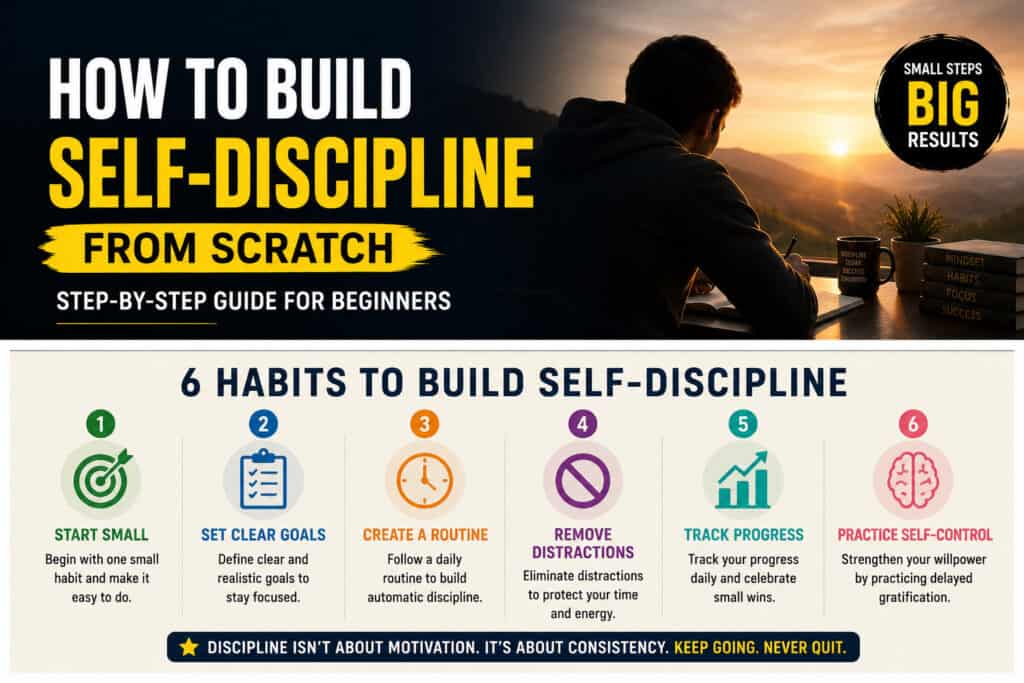
Step 1: Start With One Small Habit
The biggest mistake beginners make is starting too big.
Instead of changing your entire life, choose just one simple action.
Examples:
- read for 5 minutes
- exercise for 10 minutes
- wake up 10 minutes earlier
If you struggle to start tasks, learn how to stop procrastinating before building routines.
👉 Small actions are easier to repeat — and repetition builds discipline.
Step 2: Remove Friction and Distractions
Discipline becomes easier when your environment supports it.
Ask yourself:
- what usually distracts me?
- what makes this task harder to start?
Then reduce those obstacles.
Examples:
- keep your phone away while working
- prepare your workspace in advance
- remove apps that waste time
👉 The easier it is to start, the more consistent you become.
Step 3: Create a Simple Daily Routine
You don’t need a perfect routine — just a consistent one.
Attach your habit to something you already do.
Examples:
- read after waking up
- exercise after work
- write before sleeping
small habits compound over time
👉 This reduces decision-making and builds automatic behavior.
Step 4: Focus on Consistency, Not Perfection
You will miss days. That’s normal.
What matters is:
👉 not quitting after a mistake
Instead of thinking:
- “I failed, I’ll start next week”
Think:
- “I’ll continue tomorrow”
👉 Discipline grows through consistency, not perfection.
Step 5: Track Your Progress
Tracking keeps you accountable.
Simple ways to track:
- mark days on a calendar
- use a habit tracker
- write a daily checklist
Building discipline becomes easier when you learn how to stay consistent even without motivation.
👉 When you see progress, you’re more likely to continue.
Step 6: Make It Slightly Harder Over Time
Once your habit becomes easy, improve it slowly.
Examples:
- 5 minutes → 10 minutes
- 10 pushups → 15 pushups
👉 Growth should feel manageable, not overwhelming.
Effective self discipline requires clear goals, daily routines, and tracking progress to maintain consistency.
Common Mistakes That Destroy Discipline
Avoid these:
- starting too big
- relying on motivation
- trying to be perfect
- quitting after one bad day
👉 These are the real reasons most people fail.
What to Do If You Feel Unmotivated
You don’t need motivation to act.
Instead:
- start with the smallest possible step
- focus on just beginning
- build momentum
👉 Action creates motivation — not the other way around.
“And when the initial motivation wears off — which it always does — the next skill to build is staying consistent when motivation fades.”
Simple Daily Discipline Checklist
Follow this:
- choose one habit
- make it easy to start
- repeat it daily
- don’t quit after missing a day
- improve slowly
Final Thoughts
Building self-discipline is not about forcing yourself.
It’s about:
- starting small
- staying consistent
- improving gradually
If you follow this process, discipline becomes natural over time.
Your Next Step
Now that you know how to start:
👉 pick one small habit
👉 take action today
And if you want to understand the bigger picture behind discipline:
👉 Read the Complete Guide to Self-Discipline
Frequently Asked Questions About Building Self-Discipline
Building self-discipline takes time and consistency. While some habits can start forming in a few weeks, strong discipline develops through repeated daily actions over months. The key is to focus on small improvements instead of expecting instant results.
Yes, self-discipline is a skill that can be learned and improved over time. You can strengthen discipline by creating routines, practicing consistency, reducing distractions, and following small daily habits.
Many people struggle with self-discipline because they rely too much on motivation, set unrealistic goals, or try to change too much at once. Starting small and building consistent habits makes discipline easier to maintain.
The easiest way to build self-discipline is to start with one small habit and repeat it daily. For example, reading for 5 minutes or exercising for 10 minutes consistently is more effective than making extreme changes.
You can stay disciplined without motivation by lowering the difficulty of tasks, focusing on starting instead of finishing, and following a routine. Small actions create momentum, even on difficult days.
Yes, self-discipline improves through repetition. The more consistently you follow routines and complete small actions, the easier disciplined behavior becomes over time.